
"There is a sharp jump that we have seen in bookings of EVs... The jump, at least in our case, in just two months, it is about 2 to 2.5 times of what it used to be"

India's domestic passenger vehicle sales experienced a robust 24.6 per cent year-on-year increase in June, propelled by favourable government policies like income tax relief and repo rate cuts, alongside resilient rural demand, even as global crude oil prices pose potential cost pressures.

India's EV ecosystem is growing, but remains too underdeveloped to cushion a major oil supply shock.

JSW MG Motor India has unveiled ADAPT, India's first multi-powertrain new energy vehicle (NEV) platform, designed to support electric, hybrid, plug-in hybrid, and range-extender electric vehicles. The company plans to launch one electric SUV and one plug-in hybrid SUV based on this architecture during FY27, aiming to broaden its NEV portfolio and accelerate adoption in India.

India's leading passenger vehicle manufacturers are significantly increasing investments and factory capacities, alongside planning major product launches for FY27, driven by strong confidence in sustained domestic demand growth despite global geopolitical tensions and supply chain risks.

JSW Motors, part of the JSW group, is set to enter India's passenger vehicle market with plans to launch 15 new-energy vehicles (NEVs) over the next four years, with deliveries commencing from December 2026.

Tamil Nadu -- often dubbed as India's own Detroit due to its thriving automobile manufacturing ecosystem -- is in no mood to miss the EV bus either. Recent developments attest to it. Vietnamese electric vehicle (EV) maker VinFast has promised a $2 billion plant in the southern state. And as promised earlier, the work on Tata Motors-JLR plant will kick off next week, on September 28, after the foundation stone laying ceremony.

Despite India's electric passenger vehicle market experiencing an 83.6% year-on-year surge in FY26, new foreign entrants VinFast and BYD have significantly outpaced Tesla, which struggles with high import duties, a limited retail footprint, and a lack of local manufacturing commitment.

Jaguar Land Rover will begin assembling premium cars at its new Tamil Nadu plant on February 9, marking a step towards full-scale luxury car manufacturing in India.

Network scale seen as central to tapping smaller markets.

Why is Shailesh Chandra, managing director of Tata Motors Passenger Vehicles and Tata Passenger Electric Mobility, not worried about the competition?

The fiscal tilt towards capex benefits companies in investment-related sectors like capital goods, defence equipment, engineering & construction and metal & mining. The planned cut in revenue expenditure will weigh on companies in consumption sectors like FMCG, consumer durables and retail.

Delhi-based electric vehicle (EV) ride-hailing firm Evera Cabs, which grabbed headlines after acquiring 500 cars from the now-defunct cab service BluSmart, is stepping up its presence in the EV cab segment. The company is aiming for revenue of Rs 100 crore in the ongoing financial year (2025-26), up from Rs 18 crore in 2024-25.
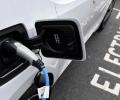
Proliferation of home chargers of around 7 KWh and above, which take six to seven hours to fully charge a car depending on the model, bring running costs down by a third or so. That, coupled with the increasing range of modern electric cars, can lead to a massive increase in sales.

India's electric mobility goal, which has so far been riding on two wheels, is all set to graduate to four wheels. At least, the journey has begun. Hyundai Motor India said it would invest Rs 4,000 crore till 2028 to launch half-a-dozen electric vehicles (EVs) in India. It would eventually straddle premium and mass segments. The first of these - the electrified version of an internal combustion engine (ICE)-powered model - will go on sale as early as next year.

The EV industry is at an inflection point and batteries will play a critical role ahead -- batteries and related components typically constitute 35-45 per cent of an EV's costs.

'Favourable product mix, sales recovery, and cost saving initiatives are expected to support margins going ahead while focus on debt reduction (target of debt free by FY24) will aid balance sheet strength'
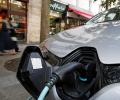
Automobile manufacturers, new and old, as well as ancillary suppliers are set to spend a combined Rs 70,630 crore over the next five years on either entering the electric vehicle segment or stepping up their presence in it. Data culled from announcements made by firms shows India, the world's fifth largest automobile market, is poised to receive one of the biggest capex pushes ever to fuel the transition from internal combustion engines to electric motors and batteries as part of a green drive. The EV push, egged on by the government's emphasis on electric mobility to meet its net zero targets, is expected to yield at least 25 electric vehicles - new ones as well as electrified versions of existing vehicles running on internal combustion engines.

'The favourable rupee-dollar exchange rate, there are opportunities we can tap.'

'If it is your second car (electric vehicle), you typically keep it for travel within the city.' 'And the first car (internal combustion engine-run vehicles) can then be used to travel to some other cities.'

Tata Motors on Monday said its subsidiary and Ford India have inked a pact with the Gujarat government to acquire FIPL's Sanand vehicle manufacturing plant. Tata Passenger Electric Mobility Ltd (TPEML) -- a subsidiary of Tata Motors -- and Ford India Pvt Ltd (FIPL) have today signed a memorandum of understanding (MOU) with the Gujarat government for the potential acquisition of FIPL's Sanand vehicle manufacturing facility, including land, buildings, vehicle manufacturing plant, machinery and equipment, Tata Motors said in a regulatory filing. The MoU also includes the transfer of all eligible employees of FIPL Sanand's vehicle manufacturing operations, subject to the signing of definitive agreements and receipt of relevant approvals, it added.

'Two would be premium products and three would be mainstream products.'

Corporate India is starting to step up its capital expenditure plans amid government incentives and signs of rising demand, company executives and analysts have indicated. This coincides with the Reserve Bank of India (RBI) recently citing a double-digit growth in private capital expenditure. Healthy balance sheets of banks and corporates, along with increasing capacity utilisation and improving business sentiment, are contributing to a favourable environment for sustained growth in private sector investments, the RBI said in its policy last week.

Ola founder and chief executive officer (CEO) Bhavish Aggarwal will step back from day-to-day operations to focus more on engineering functions, team building, and products, apart from focusing on long-term strategic projects, such as two-wheelers, cars, and innovations in quick commerce and international expansion. "I'll be spending more time with all engineering functions, team building, and on products," said Aggarwal in an internal note, adding, "I'll also be increasing my focus on our longer-term strategic projects, including new two-wheeler products, our car project, innovations in quick commerce, electrifying ride-hailing, our cell research and development (R&D), international expansion, building our Pune technology (tech) centre, and Futurefoundry UK." To drive scale, speed, and quality, Aggarwal said he is expanding Ola Group's chief financial officer (CFO) G R Arun Kumar's role to help him steer 'day-to-day operations' across the group.

Market cap touches Rs 5 lakh crore; earnings growth to spurt in FY19

10 stocks which are most popular with brokerages right now and are expected to deliver maximum upside over the next 12 months.

Renault says that one of the reasons why its sales look muted when compared to its peers is its limited reach.
